Retro speakers are making a comeback thanks to their warm sound, vintage design, and natural pairing with the vinyl revival. They blend nostalgic style with modern features like Bluetooth, so when choosing one, focus on cabinet material, connectivity, and build quality, not just the aesthetic.
Walk into any home audio store today, or scroll through a home decor page online, and you’ll spot the same thing again and again: speakers with wood finishes, round dials, and fabric grilles that look like they belong in a decades-old living room. It’s easy to assume this is just a passing design fad, but the truth runs a bit deeper. While the industry spent years focused on minimalist, hidden-away tech, retro speakers quietly built a following by doing the opposite, standing out as something you actually want to see, not just hear.
In this post we’ll look at why retro speakers are making a comeback, what makes them sound and look different, and what to check before adding one to your home.
The comeback of retro speakers isn’t happening in isolation. It’s tied to a few bigger shifts in how people listen to music and decorate their homes.
Plain black or white speakers were designed to disappear into a room. Retro speakers, and classic speakers more broadly, reject that idea completely, positioning themselves as a visible part of the room’s personality rather than tech that’s meant to be hidden away.
At the same time, the return of vinyl records played a major role. As more people bought turntables, they started looking for speakers that matched that same analog, unhurried listening experience and retro speakers fit naturally into that setup.
Retro speakers, sometimes called retro vintage speakers, are often associated with a warmer, fuller tone, largely because of their design choices. Wood cabinets, larger internal space, and simpler circuitry tend to produce a rounder sound, especially noticeable in vocals and acoustic instruments, compared to speakers built purely for compact portability.
Interestingly, a lot of people drawn to retro speakers never actually lived through the era they reference. The appeal isn’t personal memory; it’s the feeling that vintage design gives off: warm, familiar, and a little more human than another plain gadget on a shelf.
If you’re thinking about adding a retro speaker, or any of the newer retro-style home speakers, to your home, it helps to look past the aesthetic and check a few practical details first.
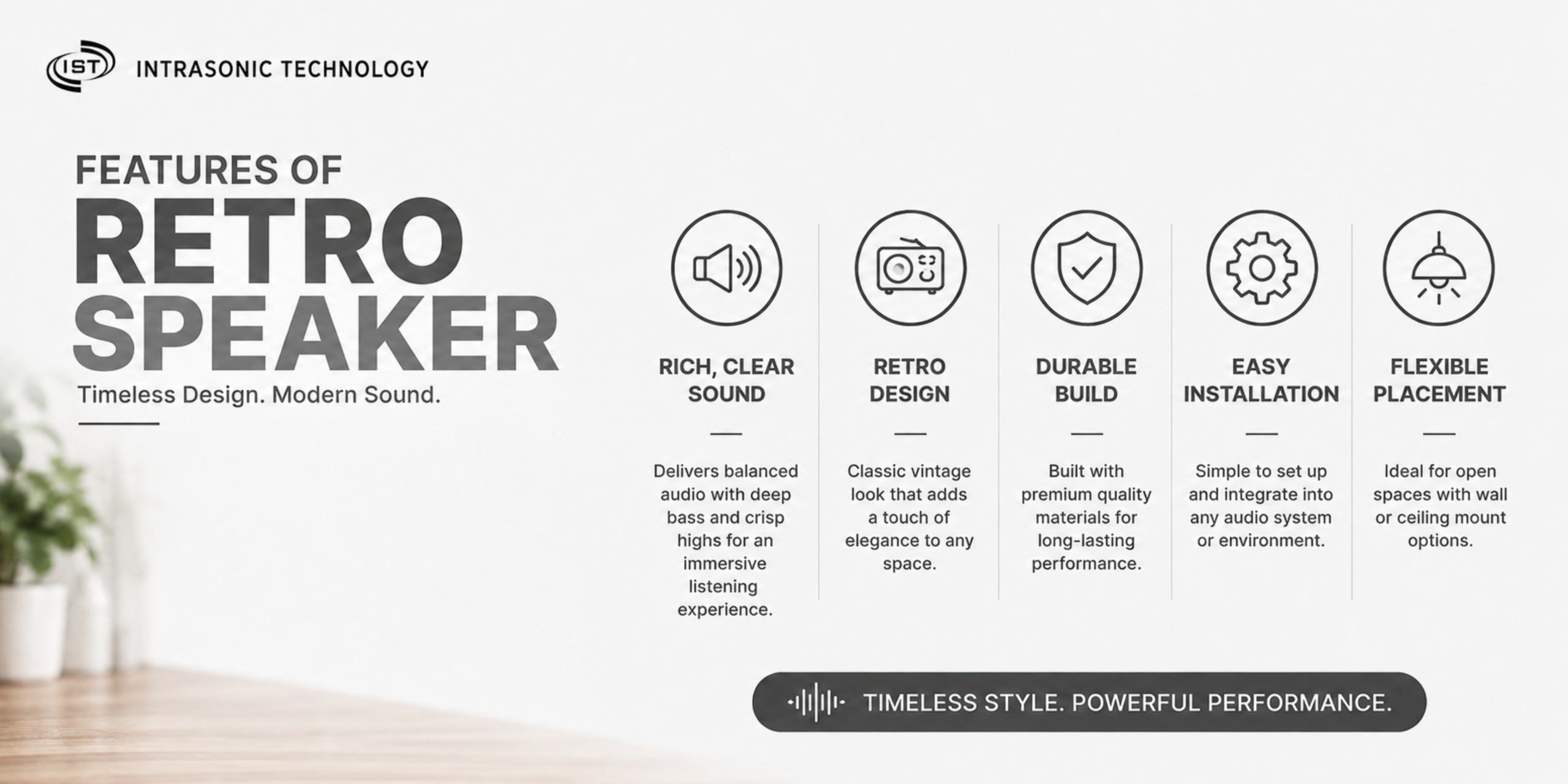
|
|---|
Here’s a quick look at how different retro speaker styles tend to suit different spaces and listening habits.
Smaller, shelf-friendly units suit bedrooms, home offices, or apartments where space is limited but you still want that warm, vintage character in your sound.
Larger, floor-standing or console-style retro speakers work well in living rooms and open spaces, often pairing nicely with a turntable as the centerpiece of a home listening setup.
For anyone who wants the retro look without being tied to wired setups, wireless retro speakers offer Bluetooth streaming while keeping that classic wood-and-fabric design intact. Brands like Intrasonic Technology have leaned into this space, combining that vintage character with modern conveniences so you’re not stuck choosing between good looks and easy day-to-day use.
Even a well-built retro speaker needs a bit of thought to sound its best.
Retro speakers aren’t just a passing look; they’re a shift toward wanting technology that actually feels good to have around, not just something that works. That warmth, character, and sense of nostalgia are exactly what’s driving people back to this style.
If you want that same warmth in your own home, Intrasonic Technology builds retro-style speakers that pair classic charm with modern performance, so you get great looks without giving up great sound.
Not necessarily, just different. Retro and classic speakers focus on warm, natural sound and visual character, while modern speakers lean toward portability and smart features.
Many retro-style speakers now include Bluetooth connectivity, so you get the vintage look without losing wireless convenience.
Mainly due to wood cabinets, larger internal space, and simpler sound processing, which together produce a fuller, more natural tone.
Yes. Retro vintage speakers are commonly paired with turntables since their warm sound profile complements the analog character of vinyl listening.
Since it’s tied to bigger shifts like the vinyl revival and warmer home decor trends, it appears to be more than a short-term fad.

Hours: 8am – 5pm Monday – Friday
Phone: 877-435-0670
International: 972-235-0670
Fax: 972-235-0890
9525 Forest View Street
Dallas, TX 75243
The Number 1 Top Manufacturer of RETRO Replacement Home Intercom Systems, Speakers, Front Door Security Cameras and Audio Equipment
©2011-2023 Intrasonic Technology, All Rights Reserved
Website Design & Development by Blue Cardigan Creative