Front speakers are the main speakers in a home audio or theater setup, and they handle most of the sound you hear, including dialogue, vocals, and instruments. If your front speakers stop working, the most common causes are loose wiring, a blown fuse, incorrect channel settings, or a damaged speaker driver. Checking these four areas first solves the problem in most cases.
Losing sound from your front speakers can be frustrating, especially in the middle of a movie or your favorite playlist. The good news is that most issues come down to a handful of common causes, and you can usually diagnose the problem in a few minutes without calling in a technician.
Whether your front speakers have gone silent or you’re shopping for new front home speakers altogether, this guide walks you through both. You’ll learn how to troubleshoot the most common problems step by step, then get practical advice on choosing front speakers that actually fit your room and your budget.
Whether you’re replacing a damaged unit or building a new setup, picking the right front audio speakers matters for long-term sound quality.
Good front home speakers balance three things: clarity, power handling, and room fit. Larger rooms need bigger drivers and more wattage, while smaller spaces do better with compact bookshelf speakers.
For front speakers for music systems, look for a wide frequency range and accurate mid-range reproduction, since most vocals and instruments live in that range. For home theater use, prioritize speakers that pair well with a center channel for smooth dialogue transitions. Brands like Intrasonic Technology are known for engineering front speakers that hold up well over years of everyday use.
If your front speakers suddenly go silent, don’t panic. This is one of the most common issues with home audio systems, and it’s usually easy to fix once you know where to look.
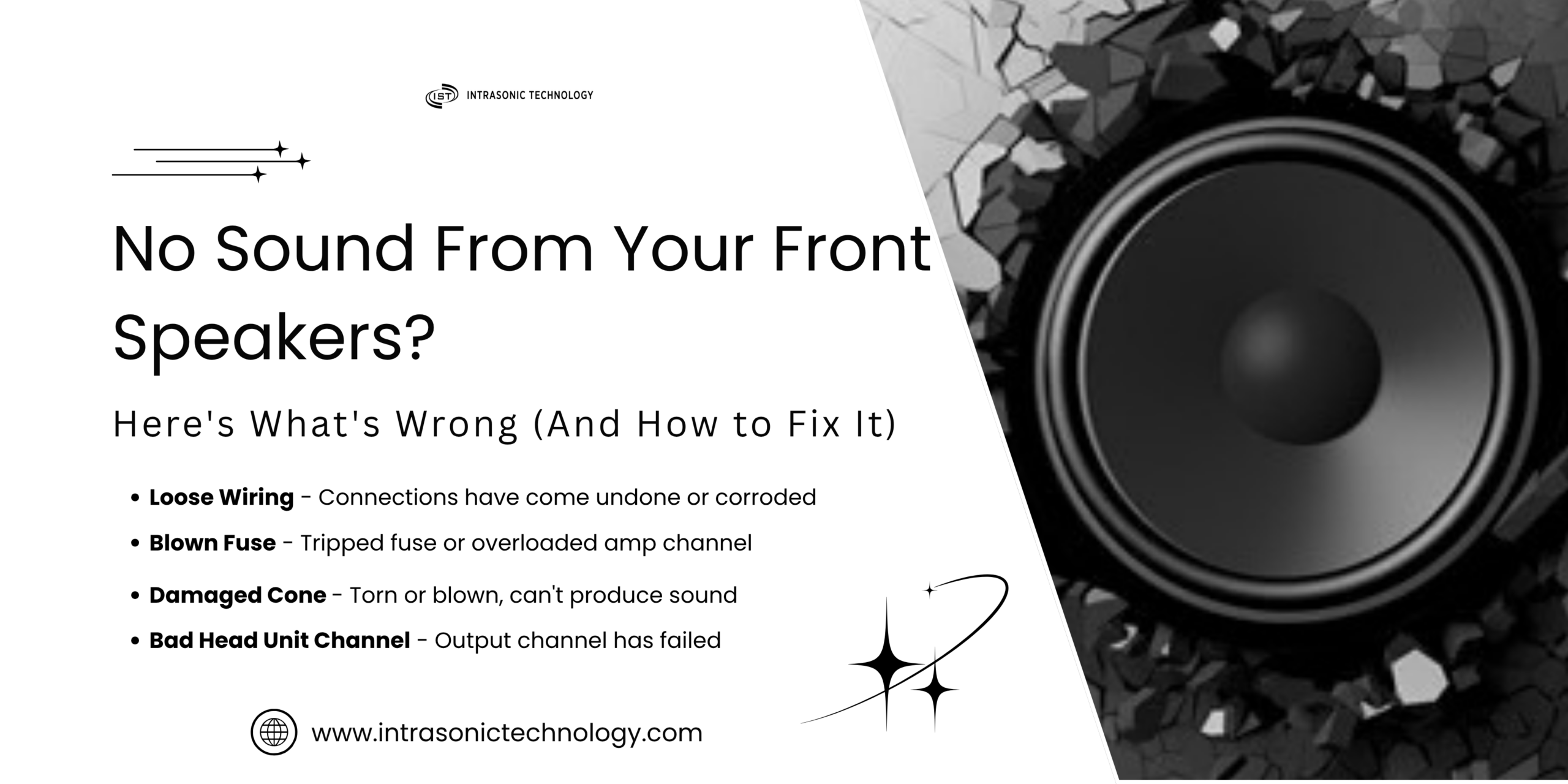
Before assuming the worst, rule out the simple stuff.
Loose connections cause more silent speaker problems than actual hardware failure. A cable that’s slightly out of its terminal can cut off sound completely.
Speaker wire can fray, corrode, or loosen over time, especially after moving furniture. Disconnect the wire, trim any worn section, and reconnect it firmly. Positive and negative wires must match on both ends, or you’ll get weak, uneven sound.
Modern receivers let you assign channels manually. If your front speakers are set to the wrong channel or the “front” output has been disabled in the settings menu, no sound will come through even though everything is wired correctly. Go into your receiver’s speaker configuration menu and confirm the front left and right channels are active and assigned correctly.
If wiring and settings check out, the issue may be inside the speaker itself. A damaged driver, blown from too much volume or age, will produce no sound or a faint crackle. Swap the speaker with another channel temporarily. If the sound follows it, the driver likely needs repair or replacement.
| Speaker Type | Best For | Average Price Range | Sound Quality |
|---|---|---|---|
| Bookshelf Speakers | Small to medium rooms | $150 to $500 per pair | Clear, balanced |
| Floor-Standing Towers | Large rooms, home theater | $400 to $1,500 per pair | Deep, powerful |
| In-Wall Front Speakers | Clean, hidden setups | $200 to $700 per pair | Good, slightly less bass |
| Soundbar Front Channels | Simple setups, apartments | $100 to $400 total | Convenient, moderate quality |
No matter which type you choose, the right front speakers come down to matching your room size, budget, and how you use your system most. If you split time between music and movies, floor-standing towers or a solid pair of bookshelf speakers usually offer the best balance of clarity and power.
Front speakers play the biggest role in how your music, movies, and shows actually sound. Most sound problems come down to simple wiring or settings issues, and most buying decisions come down to matching the speaker to your room and how you use your system.
If your current setup isn’t delivering the sound quality you expect, it may be time for an upgrade or a professional check. Reach out to a trusted audio specialist like Intrasonic Technology to test your system or explore front speaker options that fit your space and budget.
1. Why Do My Front Speakers Sound Quieter Than Others?
This usually points to a balance setting in your receiver or a partial wiring fault. Check the channel levels first.
2. Can I Mix Different Brands for Front Speakers?
Yes, but matching brands or similar tonal quality gives more consistent sound.
3. How Far Apart Should Front Speakers be Placed?
Place them at ear level, angled toward the listening area, about 6 to 10 feet apart depending on room size.
4. Do Front Speakers Need a Subwoofer?
Not always. Floor-standing towers often handle bass well on their own. A subwoofer adds depth but isn’t required for clarity.
5. How Long Do Front Speakers Usually Last?
With normal use, quality front speakers last 15 to 20 years. Overpowering or moisture is the most common cause of early failure.

Hours: 8am – 5pm Monday – Friday
Phone: 877-435-0670
International: 972-235-0670
Fax: 972-235-0890
9525 Forest View Street
Dallas, TX 75243
The Number 1 Top Manufacturer of RETRO Replacement Home Intercom Systems, Speakers, Front Door Security Cameras and Audio Equipment
©2011-2023 Intrasonic Technology, All Rights Reserved
Website Design & Development by Blue Cardigan Creative