Great sound can be part of the room without taking over the room.
Just imagine watching a movie without the big speakers sitting next to the TV. Think about playing music while keeping countertops, floors, and shelves clear. This kind of clean audio arrangement is provided by a wall music system. It installs speakers inside the wall for a clean look in your space while supporting everyday entertainment.
That distinction can be essential if you’re a homeowner choosing between regular speakers and built-ins. Both can provide excellent sound but are made for different uses. Traditional speakers offer more flexibility. Built-in speakers conserve space and reduce visible equipment.
An in-wall system installs the speaker in the cavities of the wall. When installed, only the grille is visible. This works well for living rooms, bedrooms, kitchens, offices, and home theaters.
The big advantage is space. Speakers require no shelves, cabinets, or floor stands. The cleaner look also fits nicely with modern home décor.
An in-wall music system can be part of a larger system. It may be connected to an amplifier, receiver, TV, streaming device, or home theater system.
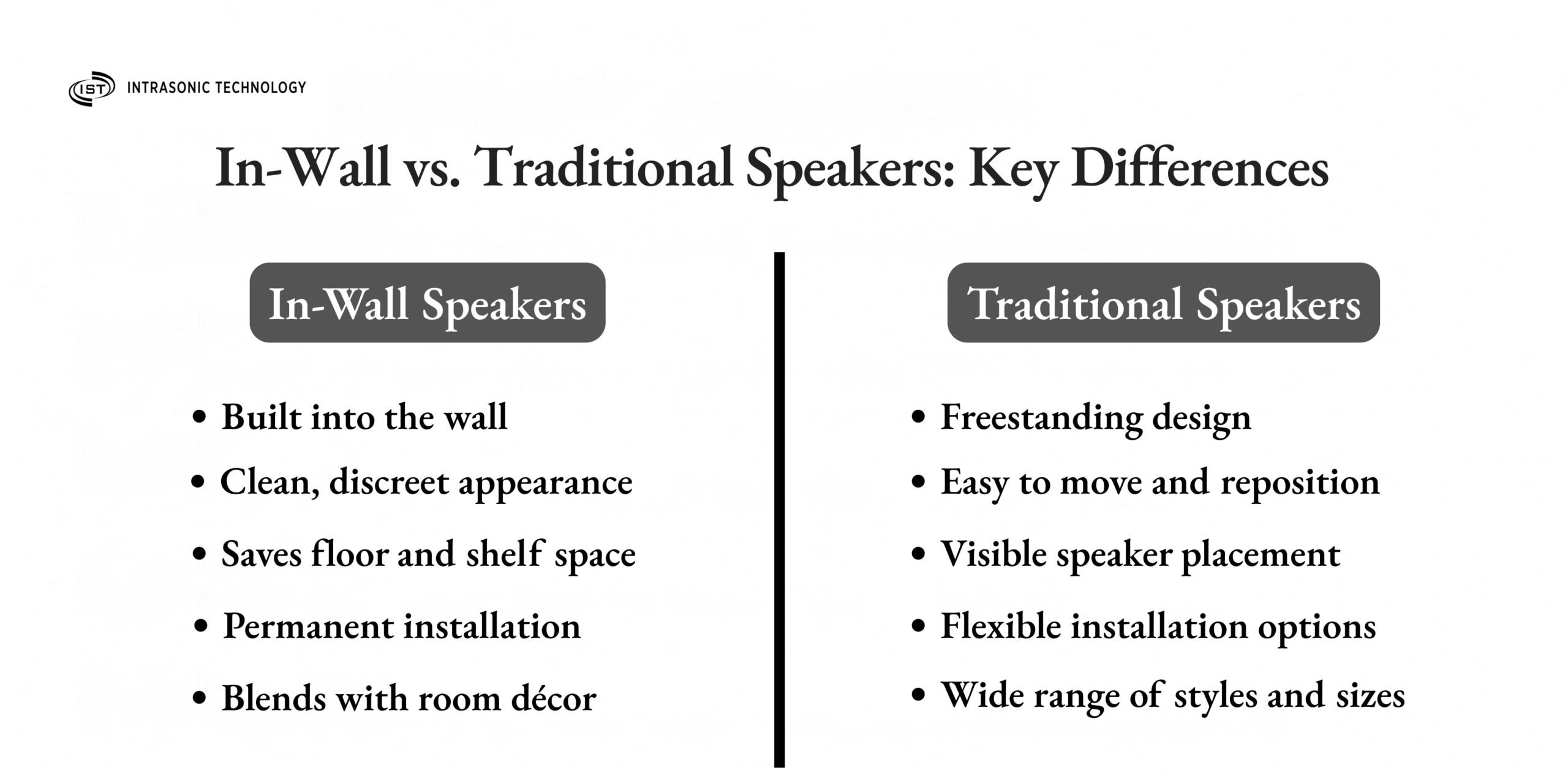
Traditional speakers are more mobile. This makes them convenient for routine changes in furniture layouts. They also need less installation effort. Built-in speakers require more planning but provide a permanent solution that makes the audio gear less noticeable.
For example, a living room may already include a television, chairs, lighting, and decorations. Having multiple large speaker cabinets can make the room feel cluttered. Integrated speakers help reduce that visual clutter.
The best choice depends on room size, installation plans, budget, and listening habits.
Home audio is becoming more connected. The Pew Research Center reported in June 2026 that 35% of U.S. adults have a smart speaker. The rise shows that audio is becoming part of everyday home technology. Linked audio doesn’t necessarily mean another device sitting on a table.
A wall sound system can deliver music in specific areas while concealing the electronics. It can also support televisions, movies, background music, and multi-room audio systems.
A concealed speaker doesn’t mean poorer sound. Buyers should pay attention to power handling, frequency response, impedance, sensitivity, and speaker size.
Speaker placement also counts. Poor placement can affect how evenly sound reaches the listening area, so it is important to plan positions before installation.
Some models include adjustable tweeters or tone controls. These features allow the sound to be matched to the room and listening position.
Built-in speakers can deliver music and TV audio without taking up important floor space.
They can focus attention on the screen while providing front, center, and surround audio.
Wall-mounted audio can free up countertop space and works well in open-plan kitchens.
Built-in speakers can provide music without taking up room on the nightstand or dresser.
They can handle music, video content, and other audio without the need for large equipment.
When priorities are clear, the decision becomes easier. Standard speakers suit those who need easy relocation and replacement. In-wall speakers are better for permanent installations where space and appearance matter.
A wall speaker system can also offer a uniform look across multiple rooms. This works well for homeowners who want to hide the audio rather than make it a statement piece. Neither option is inherently better or worse. The right decision depends on the room, equipment, budget, and installation requirements.
Intrasonic Technology offers a range of in-wall speakers for home audio. The series includes the I30W, I100W, and JA-I6AII models.
The I30W is a 30-watt unit with a frequency response of 48 Hz to 20 kHz. The I100W delivers 100 watts, a 36 Hz–22 kHz range, and adjustable bass and treble. Both are backed by a 10-year warranty.
We can help evaluate speaker types and locate a choice that matches the room, equipment, and budget. Contact us today to discuss your home audio system.
Yes. They can provide strong sound while leaving the room free of large speaker cabinets.
Not always. In-wall models are best for permanent, clean installations, while traditional speakers offer more versatility.
Yes. Many models work with suitable amplifiers, receivers, and surround sound systems. Always verify the specifications before installation.

Hours: 8am – 5pm Monday – Friday
Phone: 877-435-0670
International: 972-235-0670
Fax: 972-235-0890
9525 Forest View Street
Dallas, TX 75243
The Number 1 Top Manufacturer of RETRO Replacement Home Intercom Systems, Speakers, Front Door Security Cameras and Audio Equipment
©2011-2023 Intrasonic Technology, All Rights Reserved
Website Design & Development by Blue Cardigan Creative